


Table of Contents
- Why Choose the Right Dye for Synthetic Fabrics
- Understanding Synthetic Fibers: Polyester, Acrylic, and Nylon
- How to Dye Polyester at Home: Methods and Preparation
- Dyeing Times for Synthetic Fabrics: Temperatures and Duration
- Aybel Dyes for Synthetic and Blended Fabrics: The Best Options
- Common Mistakes to Avoid When Dyeing Synthetic Fabrics
- Post-Dyeing Care and Color Fade Resistance
- Environmental Impact and Responsible Disposal
Last updated: August 14, 2026
Why Choose the Right Dye for Synthetic Fabrics
Synthetic fibers such as polyester, acrylic, and nylon have a closed polymer structure that repels water and traditional dyes. Without the right dye and the correct method, you’ll end up with faded results, uneven spots, or a color that washes out after the first wash. Aybel offers dyes specifically formulated for synthetic fibers and blended fabrics, allowing you to achieve professional results at home.
Choosing the best dye involves understanding how dye molecules interact with the hydrophobic structure of synthetic fibers, what temperature is needed to open the polymer chains, and how long you need to leave the fabric in the dye bath to ensure even penetration.
Understanding Synthetic Fibers: Polyester, Acrylic, and Nylon
Polyester is the most common synthetic fiber in modern clothing. Its compact polymer structure makes it difficult for dyes to penetrate, requiring high temperatures (85–100°C) and specific dyes called disperse dyes.
L is easier to dye than polyester because its structure is slightly more porous. However, some acrylic fabrics have undergone water-repellent or stain-resistant treatments during production, which completely prevent the fabric from absorbing dye. Always check the label before dyeing.
Nylon absorbs dye better than polyester, but worse than wool. Blended fabrics (such as cotton-polyester or wool-acrylic) present the most complex challenge: each fiber absorbs dye at different rates, so you’ll end up with uneven shades unless you use a dye formulated for blends.
| Synthetic fiber | Ideal temperature | Recommended Dye Type | Difficulty in Dyeing |
|---|---|---|---|
| Polyester | 85–100°C | Disperse dye | High |
| Acrylic | 70–85°C | Specifically for Acrylic | Media |
| Nylon | 60–80°C | Acid or reactive dyes for fibers | Media |
| Blend (cotton-polyester) | 70–90°C | Multi-fiber formulation | High |
How to Dye Polyester at Home: Methods and Preparation
Dyeing polyester at home requires attention to detail. Wash the garment in lukewarm water with a mild detergent to remove dirt, body oils, and factory residues. Do not use fabric softener: it creates a barrier that prevents the dye from penetrating the fabric. Rinse thoroughly until the water runs completely clear.
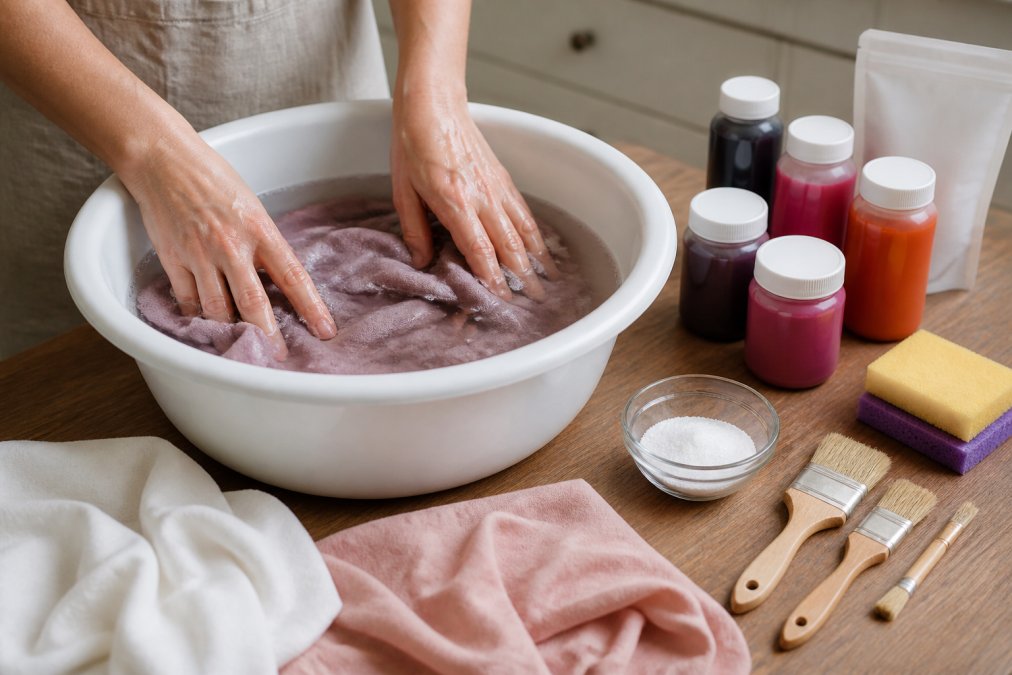
After pre-washing, the fabric should be damp but not dripping wet. Weigh the dry garment: a 10-gram packet of Aybel dye is ideal for dyeing 250 grams of dry fabric. If the fabric is heavier, you’ll need more dye.
Prepare the dye bath in a large pot (at least 10 liters of water per 500 grams of fabric). Dissolving the dye in hot water before adding the fabric ensures even distribution. If you add the fabric to the bath while the dye is still in powder form, you’ll end up with dark spots.
There are two main methods: the hand-washing method in a pot and the machine-washing method. The hand-washing method gives you more control over the temperature and duration. The washing machine method is faster, but you need to make sure the washing machine reaches sufficiently high temperatures (at least 60°C, ideally 85°C).
Dyeing Times for Synthetic Fabrics: Temperatures and Duration
Temperature is the most critical factor when dyeing synthetic fabrics. Polyester requires a temperature of at least 85°C to allow the disperse dye to penetrate the fiber. If the water is too cold, the dye remains on the surface and washes out during the first wash.
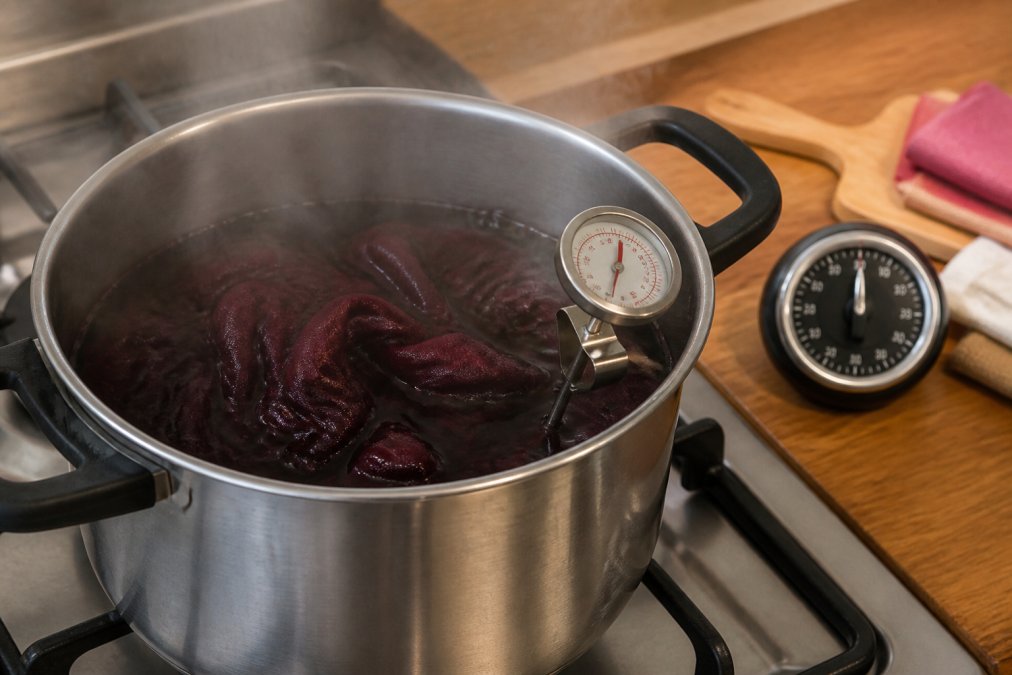
For polyester, the ideal curing time is 45–60 minutes at 85–100°C. For acrylic, 30–45 minutes at 70–85°C is sufficient. For nylon, 20–30 minutes at 60–80°C. During the curing time, the temperature must remain constant. Use a thermometer to check the temperature every 10 minutes. Keep the heat at a medium-low setting to prevent the water from boiling too vigorously.
After the soaking time, let the fabric cool slowly. Do not wring it out immediately from the hot water. Let the temperature drop gradually to about 40°C before removing the fabric from the bath.
| Fiber | Temperature | Exposure time | Cooling Rate |
|---|---|---|---|
| Polyester | 85–100°C | 45-60 min | Slow (10–15 min) |
| Acrylic | 70–85°C | 30-45 min | Moderate (8–10 min) |
| Nylon | 60–80°C | 20-30 min | Moderate (5–8 min) |
| Mixed Blends | 75–90°C | 40-50 min | Slow (10–15 min) |
Aybel Dyes for Synthetic and Blended Fabrics: The Best Options
Aybel offers a complete line of dyes formulated for synthetic and blended fabrics. Aybel’s formulations have been specifically developed to penetrate synthetic fibers and produce uniform, long-lasting colors. Each dye is available in liquid (225 ml) or powder (10 grams) form.
Aybel dyes for synthetic fabrics are suitable for polyester, many acrylics, and nylon. However, they are not suitable for polyester that has been treated to be water-repellent or stain-resistant. Always check the garment's label before you begin.
With Aybel, the color is even and holds up to repeated washings when you follow the recommended times and temperatures correctly.
Bright Lilac Fabric Dye
Aybel's Lilla Acceso is a deep, sophisticated shade of purple. It's perfect for revitalizing dark garments that have lost their vibrancy, or for completely transforming a white or neutral garment. At 4.99 euros per packet, one packet dyes 250 grams of dry fabric, making it ideal for T-shirts, scarves, or small projects.

Fabric Dye: Pink and Related Shades
Aybel offers three shades of pink. Classic Pink is a medium shade that works well with almost any garment. Antique Pink is softer and more vintage, perfect for a shabby chic look. Dark Pink is a rich shade ideal for bold pieces.

Cyclamen is a more vibrant shade of pink, with a hint of purple—perfect for those who love bold colors.
Fabric Dye: Melon Orange and Coral
Melon Orange is a warm, inviting shade that works well on neutral-colored fabrics. It is particularly effective on linen-polyester or cotton-polyester garments because the color develops evenly on both fibers.

Coral is more delicate than Melon Orange, with a pink base that makes it more versatile. It works well on both light-colored garments and previously dyed ones. The key is not to shorten the processing time: 45–50 minutes for polyester ensures that the dye penetrates completely.
Common Mistakes to Avoid When Dyeing Synthetic Fabrics
L most common L is using water that is too cold. Many beginners think that hot water will damage the fabric, so they use lukewarm water (40–50°C). The result is a very faint color that fades after just a few washes. Polyester can withstand temperatures of 85–100°C without damage.
Another common mistake is not stirring the fabric during the soaking time. If you leave the garment sitting still in the dye bath, the dye will accumulate in certain spots, creating dark spots and light areas.
Many beginners add the fabric to the bath before the dye has completely dissolved. Always dissolve the dye in hot water before adding the fabric.
A less obvious mistake is failing to check the fabric composition. If the garment is a blend (for example, 65% polyester, 35% cotton), you’ll need a dye formulated for blends, not a dye intended solely for polyester.
Finally, many beginners don't rinse their hair properly after dyeing it. Rinse with cold water until the water runs completely clear, then give it a final rinse with a color fixative to seal in the color.
Post-Dyeing Care and Color Fade Resistance
After dyeing the fabric, wait at least 24–48 hours before washing the garment for the first time, allowing the dye to set completely. When you wash the garment for the first time, use cold water and a mild detergent. Hand washing is much gentler than machine washing.
For subsequent washes, continue to use cold water. Hot L opens up the fibers and causes the dye to bleed. If the garment needs to be washed in hot water, use a maximum temperature of 30–40°C.
Air-dry the garment whenever possible. Tumble L generates heat that can cause the color to fade over time. Expose the garment to direct sunlight as little as possible, since UV rays cause synthetic dyes to fade.
Environmental Impact and Responsible Disposal
Dyeing textiles has an environmental impact, but it’s still more sustainable than buying new clothes. Every time you dye a garment that you would otherwise have discarded, you extend its useful life and reduce textile waste. According to research on textile sustainability by the Ellen MacArthur Foundation, extending the life of a garment by as little as 9 months reduces its environmental impact by about 20–30%.
It is important to dispose of used dye water properly. Do not pour it directly down the drain. Let the water cool, and allow the excess dye to settle at the bottom of the container. Pour the clear water down the drain and dispose of the dye residue as solid waste.
Aybel dyes are formulated to be as non-toxic as possible, but they still contain chemical dyes. They are not intended for human consumption and should not be poured in areas where children or animals might come into contact with them. Always store the dyes in a cool, dry place, out of the reach of children.
If you're interested in further reducing your environmental impact, consider using natural dyes for natural fibers. However, natural dyes do not work on synthetic fabrics. For polyester, acrylic, and nylon, synthetic dyes such as those from Aybel are currently the only practical option for consistent results.
Dyeing synthetic fabrics at home is a skill anyone can learn with the right preparation and tools. The key is understanding how synthetic fibers absorb dye, following the recommended temperatures and processing times, and providing proper care after dyeing. Aybel simplifies this process with dyes specifically formulated for polyester, acrylic, and nylon. Start with a small project, follow the steps carefully, and you’ll discover that dyeing your favorite garments is both rewarding and cost-effective. Visit the Aybel shop to choose the right dye for your next textile renewal project.
Frequently Asked Questions
What is the best dye for synthetic fabrics?
Dyes specifically designed for synthetic fibers such as polyester, acrylic, and nylon work better than all-purpose dyes. Dyes for synthetic fabrics must penetrate the hydrophobic structure of the fiber. Aybel dyes are formulated for natural and semi-synthetic fabrics such as nylon, delivering uniform results starting at €4.99 per packet. The choice depends on the type of synthetic fiber and your preferred dyeing method (by hand or in the washing machine).
How can you dye polyester at home without getting uneven results?
To avoid stains when dyeing polyester at home, prepare the fabric by pre-washing it thoroughly, use the correct amount of dye based on the fabric’s weight, maintain a constant temperature during the dyeing process, and stir the garment frequently. Polyester requires higher temperatures than cotton. A 10-gram packet of Aybel dye is ideal for dyeing 250 grams of dry fabric. Distribute the garment evenly throughout the dye bath to ensure uniform absorption.
What are the correct processing times for dyeing synthetic fabrics?
Dyeing times for synthetic fabrics vary depending on the type of fiber and the method used. Generally, nylon requires 30–45 minutes at a high temperature (85–95°C), while polyester may require longer processing times. Machine dyeing follows the standard machine cycle. Always consult the specific instructions for the dye being used. Insufficient processing time results in a lighter color, while excessive processing time does not improve color absorption but wastes more dye.
Does the dye color remain stable after washing?
Color fastness depends on the type of dye, the fabric preparation, and post-dyeing care. Synthetic fabrics like polyester retain their color better than nylon. After dyeing, rinse with cold water until the water runs clear, then dry in the shade. Wash the garment in cold water with mild detergents for the first few washes. Avoid prolonged exposure to direct sunlight to prevent fading. High-quality dyes, such as those from Aybel, ensure better adhesion to the fibers.
Can I dye a garment made of different percentages of synthetic and natural fibers?
Yes, garments made of synthetic blends can be dyed, but the result depends on the percentage of each fiber. A blend with a higher percentage of cotton will absorb the dye more evenly than one with a high polyester content. Choose a dye that is compatible with both fibers present. For best results on blended fabrics, slightly increase the processing time and temperature. Universal dyes like Aybel work on polyamide (nylon), cotton, wool, and natural fibers, but not on pure polyester.
This article was written using GrandRanker


